Root intrusion
Roots enter at a joint or hairline crack and thicken inside the pipe. Cut back with a cable, but the entry point itself isn't closed by cutting — worth knowing before assuming it's fixed for good.
Several fixtures affecting each other — a toilet gurgling when the washer drains, water backing up into a downstairs tub — points to the main line, not any single drain. Cleared at the cleanout with equipment sized for the whole line.
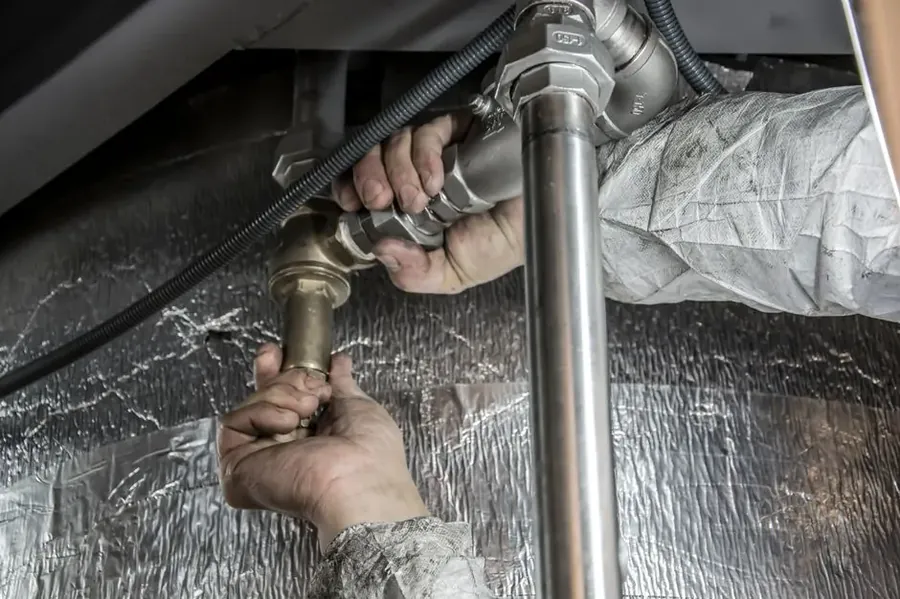
Every drain in a property eventually joins one main line running out to the sewer lateral. A blockage there doesn't affect one fixture — it affects all of them, and it tends to surface first at whichever fixture sits lowest in the building, not the one actually causing the problem.
That's why the diagnosis starts with a pattern, not a single symptom: does running one fixture affect another? If yes, this is the service you need, worked from the cleanout — not a single-fixture cable job at whichever drain happens to be acting up.
If a main line blocks again within months of being cleared, the pipe is usually the problem. Much of La Jolla was built between the 1920s and the 1970s, which means clay and cast-iron sewer laterals that are now 50 to 100 years old. Clay joints separate and let roots in. Cast iron scales from the inside and eventually splits along the bottom. Hillside soil movement offsets joints and creates bellies that hold water and waste.
Every sewer line repair starts with a camera inspection. The footage shows what failed, where it is, how deep it sits and how much of the line is affected. Then we can quote the smallest repair that will actually last. In the City of San Diego, the property owner is responsible for the sewer lateral from the building to the public main, so the decision and the cost are yours. You should see the evidence first.
Trenchless sewer repair in La Jolla fixes a damaged section of pipe from the inside, through the existing cleanout. A resin-soaked liner is pulled to the exact spot shown on the camera, inflated against the pipe wall and cured in place. It seals a cracked section, a separated joint or a root entry point without digging up the driveway, landscaping or hardscape.
It suits lines that are sound overall with a few bad spots. It doesn't suit a fully collapsed section, because the liner needs a pipe to form against, or a severe belly, because a liner follows the sag rather than correcting it.
When the whole lateral has failed, trenchless sewer replacement in La Jolla is usually done by pipe bursting. A bursting head is pulled through the old pipe from one small access pit to another, splitting the old line outward while pulling new seamless HDPE pipe in behind it. You get a new sewer line with two holes in the yard rather than a trench along its full length.
It's the method we look at first for full sewer line replacement and new sewer line installation where the route is clear. On steep Mount Soledad lots, under mature trees, or where the old line runs beneath a structure, it's often the only practical option short of rerouting the line entirely.
Sewer relining runs a continuous cured-in-place liner along the full length of the lateral, creating a new jointless pipe inside the old one. Because there are no joints, roots have nowhere to enter. Liner systems are generally designed for a service life of around 50 years.
Before lining, the line is cleaned back to bare pipe wall with root cutting and hydro jetting, then filmed again. Any branch connections are reopened from inside with a robotic cutter. The finished pipe is slightly smaller than the original, which is rarely a problem on a residential lateral.
| Method | Best for | Digging | Typical time on site |
|---|---|---|---|
| Spot repair (excavation) | One collapsed section in an accessible spot | One trench at the failure | 1–2 days |
| Trenchless spot repair | A few cracks, joint separations or root entries | None, through the cleanout | Half a day to 1 day |
| Full relining (CIPP) | A line with many bad joints but no collapse | None, or one small access pit | 1–2 days |
| Pipe bursting | A line that has failed end to end | Two small access pits | 1–2 days |
Commercial sewer cleaning in La Jolla is usually a grease and volume problem. Restaurants on Prospect Street and Girard Avenue, and condo buildings near Torrey Pines, send far more fat and solids down their laterals than a house does. We clean commercial lines from the interceptor or building cleanout to the city connection, film them, and set a maintenance interval so you're not paying for emergency calls.
When a commercial line needs repair, the same trenchless options apply and matter even more. Lining or bursting a lateral under a restaurant patio or a parking structure avoids days of closure.
Four causes account for nearly every main-line call, and they need different responses.
Roots enter at a joint or hairline crack and thicken inside the pipe. Cut back with a cable, but the entry point itself isn't closed by cutting — worth knowing before assuming it's fixed for good.
Cabling bores a channel through it; the buildup on the pipe wall stays unless it's jetted off.
A low spot or a shifted joint holds water and collects solids no matter how well the line is cleared — a structural issue, not a cleaning one.
Nothing gets through until it's identified with a camera. We tell you plainly if this is what we're seeing rather than repeatedly cabling a line that can't actually pass.
Which fixtures, in what order, and what happens when each one runs. That pattern locates the problem before anything is opened.
Normally an exterior access point near the foundation. Where there isn't one, access is through a pulled toilet or a roof vent instead — both slower.
A sectional or drum machine sized for the main line, not a fixture-level cable — cuts through roots and clears standard blockages.
Where grease or scale is coating the pipe wall rather than just blocking it, jetting restores the line's actual working diameter.
Confirms the line is genuinely clear and flags whether what caused it — roots, a belly, an offset — is something that will recur.
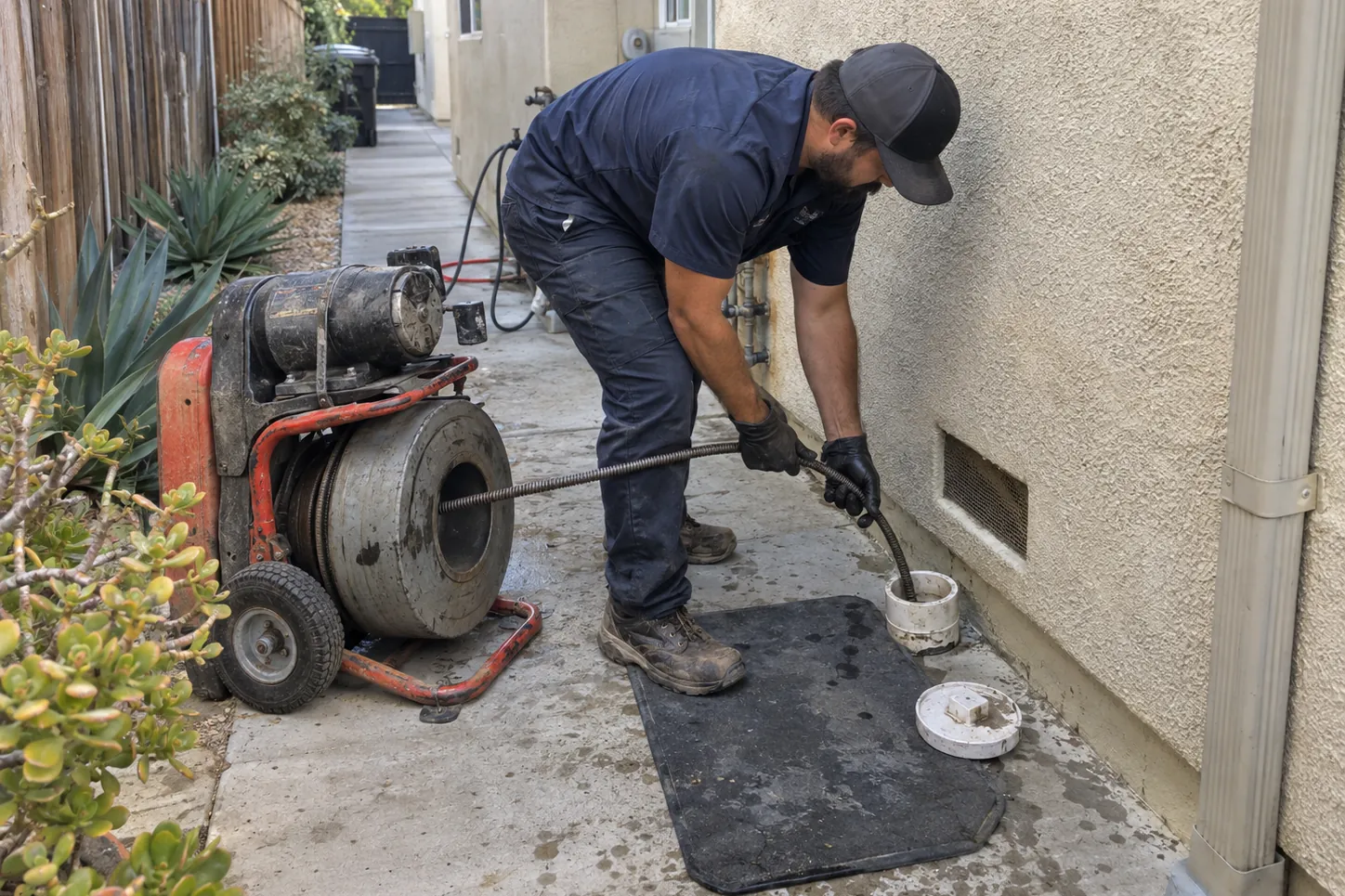
Which fixtures, in what order, and what happens when each one runs. That pattern locates the problem before anything is opened.
For grease and scale coating the pipe wall — restores the line's full diameter rather than just boring a path through.
Heavier than a fixture-level drain snake, sized to cut through roots and clear standard main-line blockages.
Used to confirm the result and to identify a belly, offset or collapsed section that clearing alone won't fix.
For localized blockages that don't need the full jetting or heavy-cable treatment.
Two bathrooms and the laundry standpipe backing up together — a pattern pointing past the fixtures to the main line.
After: Camera located roots at a clay pipe joint; cut back with a sectional cable, then jetted to clear the resulting debris.
Book this service →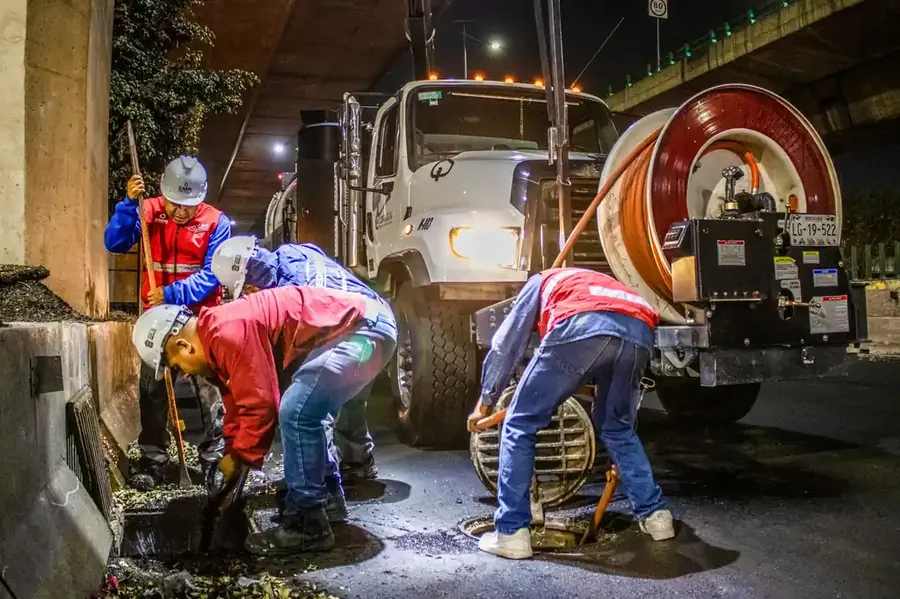
A resident in Pacific Beach had ongoing plumbing issues due to tree roots invading their sewer line.
After: Post hydro jetting, the roots were completely cleared, restoring the integrity of the sewer line and preventing future blockages.
Book this service →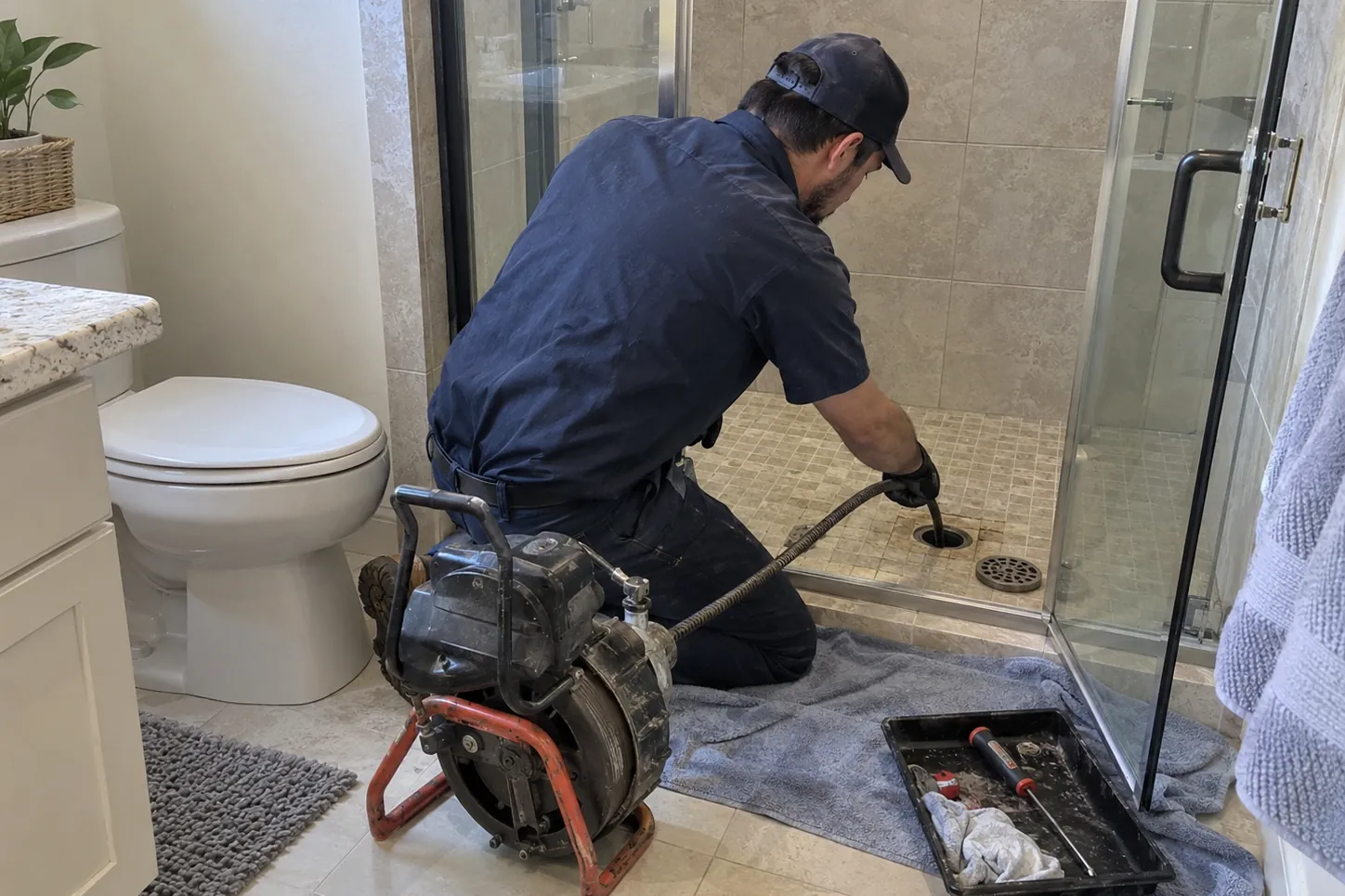
A homeowner in University City noticed multiple drains slowing at once, all tracing back to the same main line.
After: Cleared from the cleanout; camera confirmed the line was sound with no structural issue behind the blockage.
Book this service →The specific patterns that point here rather than to a single-fixture clog.
Ask a proThe washing machine filling a shower tray, or a toilet gurgling when another drain empties — the restriction is downstream of both.
Usually root intrusion, tracking the growing season — cut back and jetted, with the entry point flagged for the record.
Often means the cause is buildup rather than a one-off blockage — jetting addresses what cabling alone leaves behind.
Main line cleaning has fixed price ranges. Sewer line repair, trenchless replacement and relining are quoted in writing from camera footage, because the price depends on the length, depth and condition of your specific line.
| Service | What's included | Price |
|---|---|---|
| Main line cabling from a cleanout | Accessible exterior cleanout, residential line | $275 – $450 |
| Main line cabling, no cleanout | Through a pulled toilet or roof vent | $395 – $550 |
| Root cutting, main line | Cutting head sized to the pipe, with a camera check after | $350 – $500 |
| Cleanout cap replacement | Seized or corroded exterior cap replaced | $95 – $150 |
| Trenchless repair, replacement or relining | Priced from camera footage and line length, in writing | Written quote |
$49 off when you book online. Every visit is covered by our 90-Day Clog-Free Guarantee. You approve a written price before any work starts.
Cleaning a main line is the right first step most of the time, but not every time. These are the cases where we'll tell you to stop paying for cleaning.
“I had a severe clog in my main line, and Drain Cleaning La Jolla responded quickly. Their team was professional and cleared the blockage in no time. Highly recommend!”
Sarah L.Homeowner, Pacific Beach
✓ Verified“I was impressed with the thoroughness of the camera inspection. They explained everything clearly and did a fantastic job with the cleaning. My drains are flowing perfectly now.”
Mike T.Resident, University City
✓ Verified“The service was prompt and affordable. I appreciate the follow-up recommendations for maintenance. I feel much more confident about my plumbing now.”
Jessica R.Homeowner, Torrey Pines
✓ VerifiedTest whether fixtures affect each other. Run the washing machine and watch the shower tray, or flush an upstairs toilet and watch a downstairs tub. If using one affects another, the blockage is downstream of both — that's the main line.
A cable bores a path through a blockage — fast, and the right call for roots or a solid obstruction. Jetting scours the full pipe wall, which is what actually removes grease and scale rather than just punching through it.
Roots are cut back but the entry point isn't sealed by cutting — they can return. A belly (a low spot) or an offset (a shifted joint) are structural, not something cleaning fixes — a camera identifies which one you're dealing with.
Usually a capped pipe near the foundation or in the yard. If there's no accessible cleanout, we can access the line through a pulled toilet or roof vent instead — both take longer.
Sewer line repair is quoted in writing from camera footage, because the cost depends on the length of line affected, its depth, and whether it runs under hardscape or structures. A single trenchless spot repair costs a fraction of a full replacement. The camera footage tells us which one you need.
Repairing a sewer line from inside the pipe instead of digging a trench to it. A cured-in-place liner seals a damaged section, or pipe bursting pulls a new line through the old one. Both work through a cleanout or small access pits.
Usually yes, and it's often the better option there. Pipe bursting needs a clear path for the new line and two access points, not a full trench, so steep yards, retaining walls and mature landscaping can stay where they are.
Cured-in-place liner systems are generally designed for a service life of around 50 years. Because the liner has no joints, roots can't get back in the way they do through old clay joints.
In the City of San Diego, which includes La Jolla, the property owner is responsible for the sewer lateral from the building to the connection with the public main. Problems in the public main itself are the city's responsibility.
Every one to two years for an inspection if you've had no problems. Every 12 to 18 months if roots are present. Every three to six months for restaurants and grease-heavy multi-unit buildings.
Main Line Drain Cleaning is available across La Jolla, with a 45-minute average arrival in 92037. Each neighbourhood page covers the drain problems we see most there.
Tell us which fixtures are affected and what happens when you run each one — that pattern usually locates the problem before we arrive.
Call NowFor prompt service and expert advice on drain cleaning, reach out to us. We're available 24/7 to assist you with your plumbing needs.